

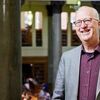
Professor Peter Anderson
- Position: Professor of Twentieth-Century Spanish History
- Areas of expertise: Twentieth-Century Spanish history; the history of tourism; the history and memory of the Spanish Civil War; child removal in twentieth-century Spain; humanitarianism; refugees
- Email: P.P.Anderson@leeds.ac.uk
- Location: 427 Parkinson
Profile
I study the social and political history of twentieth-century Spain and hold particular interests in the role of repression and support in building General Franco’s regime during and after the Spanish Civil War (1936-1939). I am currently exploring the social history of Spain’s rise as an international accepted world tourism power from the 1950s. My research positions twentieth-century Spain centre-stage in major global events and focuses on often marginalised groups whose stories, agency, and subjectivity illumate signficant historical processes. My current research on tourism examines the role of largely overlooked ‘mass’ tourists and tourism workers and how Spain’s development became part of their life stories. I also placed ‘ordinary’ people at the heart of events in earlier studies of political violence during and after the Spanish Civil War. These studies reveal Spain as a major global expample of collaboration in building a political regime (Francoism from 1939-1975) from below. My study of child removal in Spain provides a major case study of a phenomenon which took on huge proportions across the world in the twentieth century. This study also provides a platform for the voice and agency of ‘ordinary’ parents and children caught up in state-backed removal processes.
I gained a PhD in history at Royal Holloway, University of London and went on to hold a British Academy Postdoctoral Fellowship at the Department of International History and the Cañada Blanch Centre for Contemporary Spanish Studies, both at the London School of Economics and Political Science. I have worked at the University of Leeds since 2012.
Responsibilities
- Educational Engagement Lead
- Co-director of the Centre for the History of Ibero-America
- MA Modern History Lead
Research interests
Major Publications
Anderson, P. (2026). ‘I’m taking the Costa Brava plane’: affluent British workers’ holidays to Spain in the 1950s and 1960s. Journal of Tourism History, 1–13. https://doi.org/10.1080/1755182X.2025.2607568
From the 1950s, millions of newly affluent British workers began to holiday abroad for the first time with the majority travelling to Spain. We enjoy no detailed social and cultural history of this transformation which turned Spain into a major site for British social history. But studying this history can help us re-think our understanding of both affluent workers and tourists while enriching Spanish tourism history and British social history. To do this, this article focuses on the life narratives of early British mass tourists and how holidays became linked to their sense of personal development and framed around joy in overcoming fear, benefiting from new opportunities, demonstrating personal adaptability and experiencing personal growth. In this way, it shifts the debate on affluent workers from concerns around income and status to considering how leisure and holidays became linked to consumerism as identity making and the forging of meaning. It also highlights the importance of understanding tourists historically and within their life narratives. This helps shift the Spanish historiography on tourism from the effects of tourism to the tourist experience and opens up a new field of agency and experience to British social history.
Anderson, P. (2026). Changing places: Mediterranean tourist resorts in Francoist Spain. Journal of Tourism History, 1–14. https://doi.org/10.1080/1755182X.2026.2729002
The article reconceptualises how we think about the rapid growth of tourist resorts on Spain's Mediterranean coast during the rule of General Franco (1939–1975). Instead of analysing resort development through the lens of the built environment or ‘presentist’ anthropological study, the article looks at resorts as places (spaces invested with meaning) and how they are imagined, contested and regulated in changing ways over time. It also explores how differing emotional communities (groups with shared feelings) invested places with different meanings. This meant that some groups attempted to exclude types of tourists they felt demeaned the meaning of places they cherished. In this sense, resorts were not always centres of freedom, but also became areas policed by collaboration between state officials and members of the community who shared similar emotional outlooks.
The Age of Mass Child Removal in Spain: Taking, Losing, and Fighting for Children, 1926–1945 (Oxford University Press, 2021) analyses the ideas and practices that underpinned the age of mass child removal. This era emerged from growing criticisms across the world of 'dangerous' parents and the developing belief in the nineteenth century that the state could provide superior guardianship to 'unfit' parents.
In the late nineteenth century, the juvenile-court movement led the way in forging a new and more efficient system of child removal that severely curtailed the previously highly protected sovereignty of guardians deemed dangerous. This transnational movement rapidly established courts across the world and used them to train the personnel and create the systems that frequently lay behind mass child removal. Spaniards formed a significant part of this transnational movement and the country's juvenile courts became involved in the three main areas of removal that characterize the age: the taking of children from poor families, from families displaced by war, and from political opponents.
The study of Spanish case files reveals much about how the removal process worked in practice across time and across democratic regimes and dictatorships. These cases also afford an insight into the rich array of child-removal practices that lay between the poles of coercion and victimhood. Accordingly, the study offers a history of some of most marginalized parents and children and recaptures their voice, agency, and experience. The book also analyses the removal of tens of thousands of children from General Franco's political opponents, sometimes referred to as the lost children of Francoism, through the history and practice of the juvenile courts.
Franco’s Famine: Malnutrition, Disease and Starvation in Post-Civil War Spain (Bloomsbury, 2021) (Co-edited with Miguel Ángel del Arco Blanco). At least 200,000 people died from hunger or malnutrition-related diseases in Spain during the 1940s. This book provides a political explanation for the famine and brings together a broad range of academics based in Spain, the United Kingdom, the United States and Australia to achieve this. Topics include the political causes of the famine, the physical and social consequences, the ways Spaniards tried to survive, the regime's reluctance to accept international relief, the politics of cooking at a time of famine, and the memory of the famine.
The volume challenges the silence and misrepresentation that still surround the famine. It reveals the reality of how people perished in Spain because the Francoist authorities instituted a policy of food self-sufficiency (or autarky): a system of price regulation which placed restrictions on transport as well as food sales. The contributors trace the massive decline in food production which followed, the hoarding which took place on an enormous scale and the vast and deeply iniquitous black market that subsequently flourished at a time when salaries plunged to 50 per cent below their levels in 1936: all contributing factors in the large-scale atrocity explored fully here for the first time.
Friend or Foe: Occupation, Collaboration and Selective Violence in the Spanish Civil War (Sussex Academic Press/Cañada Blanch Centre for Contemporary Spanish Studies, 2016) examines the Francoist occupation of Spain from the perspective of controlling the population rather than capturing territory or the state. It also shifts attention from the Francoist initial use of terror against the population to the selective violence the Franco regime exercised to forestall international scandals. This led the regime to embark on the huge task of classifying the population into varying grades of friend or foe to whom contrasting degrees of punishment or freedom were granted.
To acquire the necessary information, the Francoists turned to their supporters who proved able to ‘define’ the identity of Spaniards at the grassroots of society: facts which force us to rethink the extent to which the regime followed a ‘plan of extermination’ and the degree to which the regime imposed itself from above through state institutions and violence. The book traces the evolving policy of occupation through the conquests of Málaga (February 1937), Bilbao (June 1937) and Barcelona (January 1939) and so provides a national perspective on a debate often characterised by provincial studies.
The Francoist Military Trials: Terror and Complicity, 1939–1945 (Routledge, 2010). In Spain between 1936–1945, the Franco regime carried out one Europe's more brutal but less remembered programs of mass repression. Many were murdered by the regime's death squads, and in some areas Francoists also subjected up to 15 per cent of the population to summary military trials. Here many suffered the death sentence or jail terms up to thirty years. Although historians have recognised the staggering scale of the trials, they have tended to overlook the mass participation that underpinned them. In contrast to the discussion in other European countries, little attention has been paid to the wide scale collusion in the killings and incarcerations in Spain.
Exploring mass complicity in the trials of hundreds of thousands of defeated Republicans following the end of the Spanish Civil War, The Francoist Military Trials probes local Francoists' accusations whereby victims were selected for prosecution in military courts. It also shows how insubstantial and hostile testimony formed the bedrock of 'investigations', secured convictions, and shaped the harsh sentencing practices of Franco's military judges. Using civil court records, it also documents how grassroots Francoists continued harassing Republicans for many years after they emerged from prison.
Challenging the popularly prevalent view that the Franco regime imposed a police state upon a passive Spanish society, the evidence shown in the book illustrates that local state officials and members of the regime's support base together forged a powerful repressive system that allowed them to wage war on elements of their own society to a greater extent than perhaps even the Nazis managed against their own population.
Collaboration and Engagement
Community oral-history project with Skippko in Leeds: Wish you were here - Skippko
I am a trustee of the Basque Children Association‘37 UK BasqueChildren.org
With the International Brigade Memorial Trust I helped produce teaching materials for Key-Stage 3 lessons: For teachers - International Brigade Memorial Trust
I I have featured in podcasts for the Historical Association, the series Real Dictators, and The Spanish Civil War | Short History Of... | Noiser History Podcasts
Qualifications
- PhD. Modern History
Professional memberships
- Royal Historical Society
Student education
At undergraduate level, I teach a second-year module on the history of Spain between 1898–1936; a third-year, and two-semester course, on the Spanish Civil War and a third-year module on efforts to come to term with the violence carried out behind the lines by supporters of General Franco.
I supervise a number of PhD and Masters by Research students on twentieth-century Spanish history.
Research groups and institutes
- Politics, Diplomacy, and International History
- War Studies