

Centre for Religion and Public Life



Research clusters
Work in the Centre is clustered in the following research areas
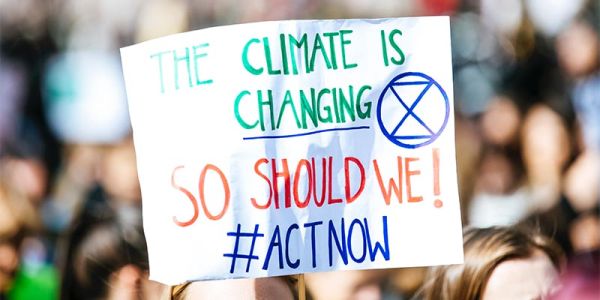
Religion, Activism and Social Justice
Work in this area is multidisciplinary, making use of anthropological, sociological, philosophical and theological approaches and concerns a wide range of global contexts
More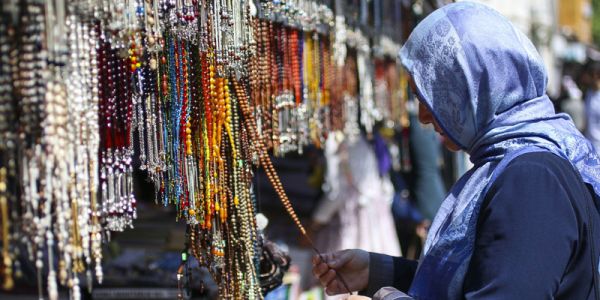
Religion, Ethnicity and Diaspora
This ethnographic research focuses on both local, national and international levels, and is mostly concerned with South Asian Muslim and Sikh communities and traditions.
More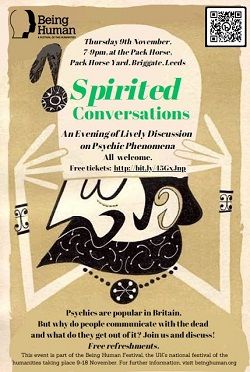
Religion, Ethics and Practice
Research covers philosophical, theological, ethnographic approaches, and the relation between beliefs in an afterlife and ethical or political engagement; religion, animal ethics and environmentalism.
More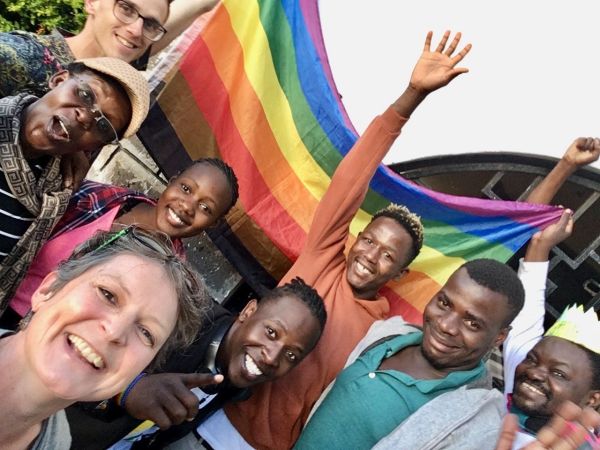
Religion, Gender and Sexuality
Research in this area makes use of anthropological, sociological, geographical, theological and textual approaches, building on feminist, queer, and postcolonial perspectives.
More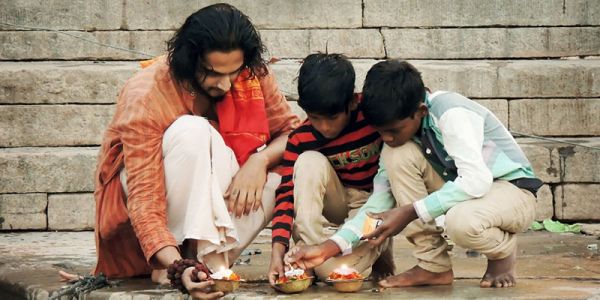
Religion, Health and Wellbeing
Work is empirical, examining the role of religious communities in public health, and also theological and philosophical, how religion contributes to human flourishing and spiritual well-being.
More
Religion, Media and Material Culture
The work explores South Asian traditions and communities in Britain and makes use of ethnographic, sociological and media-studies approaches.
More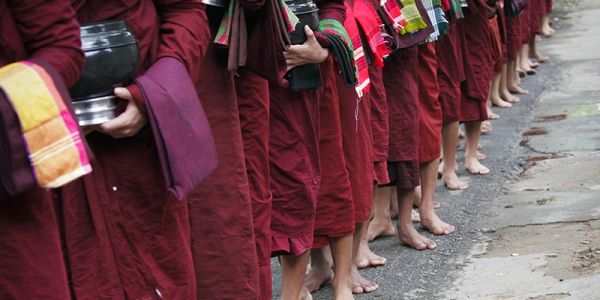
Religion, Politics and the State
This work is multiscalar, ranging from neighbourhoods, local and national governments, state institutions such as the police, and international bodies.
MoreSeminar series
The Centre for Religion and Public Life (CRPL) is pleased to announce a terrific line-up of seminar speakers for Semester 1 (2026/27).
CRPL seminars are on alternate Thursdays during teaching weeks, from 11.30-13.00 in Botany House seminar room (1.03). Everyone is welcome.
Content warning: sexual harassment and abuse.
This seminar will explore the sexual harassment and abuse of Catholic Religious Sisters, especially by Priests, and discuss the responses of church authorities when abuses are disclosed or become known. It will:
(1) examine the fictional story of Sister Shanumi in the film and novel Conclave; (2) discuss internal reports of abuses against religious sisters in 1990s, public media coverage of these reports in 2001, and the renewed internation concern over the issue since 2018; and (3) describe a current research project to learn more about church responses when sisters are subjected to sexual harassment or abuse.
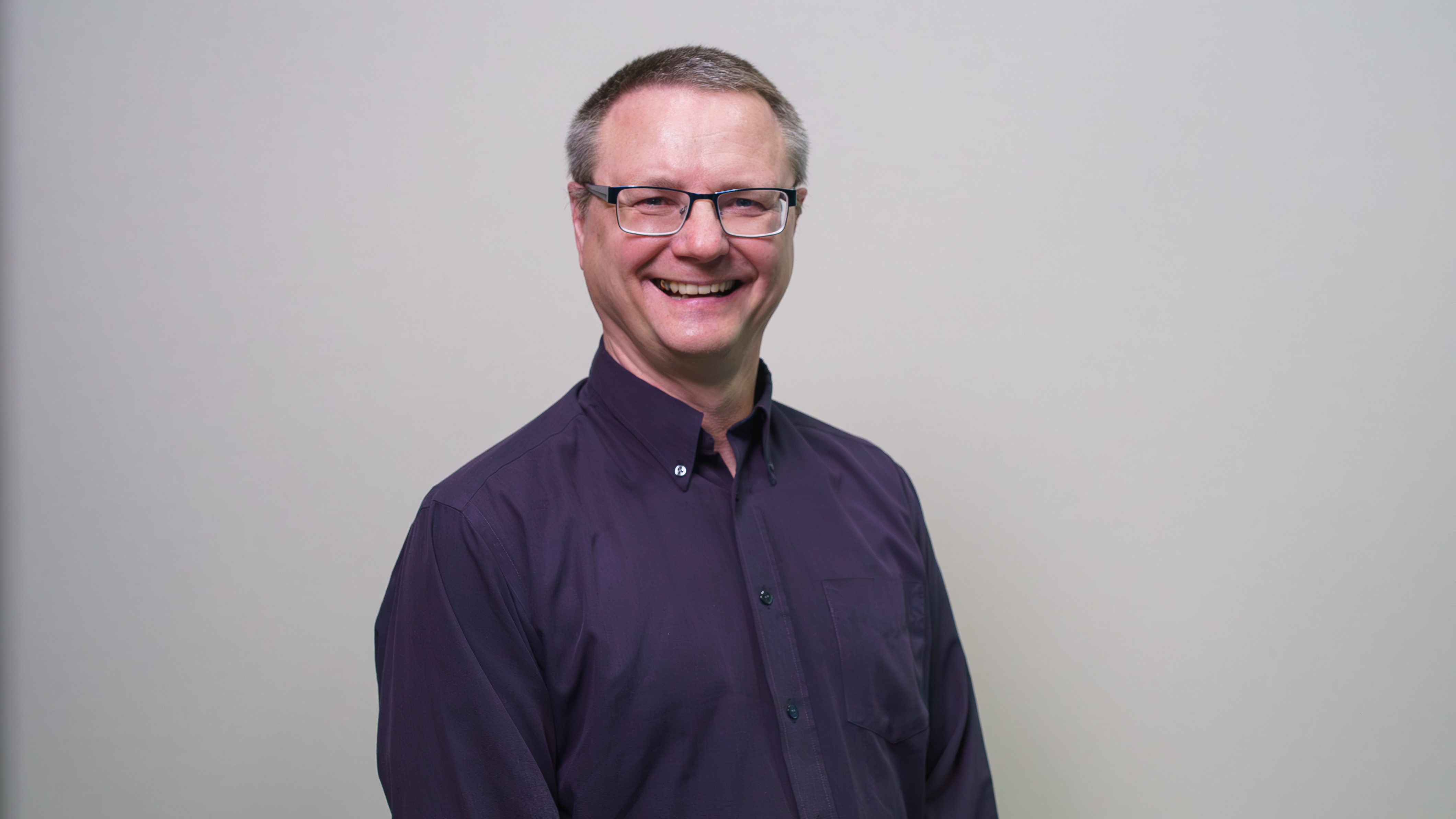
David Tombs is the Howard Paterson Professorial Chair, and Director of the Centre for Theology and Public Issues, at the University of Otago | Ōtākou Whakaihu Waka, Aotearoa New Zealand. Originally from the United Kingdom, he moved to Otago in 2015, when he was appointed under the university’s Leading Thinkers initiative. David is a lay Anglican theologian with a longstanding interest in religion and social justice. His work focusses on contextual and liberationist approaches in theology. Much of his recent research has explored how churches can make better responses to spiritual and sexual abuses. He is known internationally for biblical research that has identified the significance of forced nudity as an instrument of violence during crucifixion. Read more at www.david-tombs.com.
What does it mean to see Jesus on screen, and what happens when the person we see does, or does not, look like us? This seminar explores the relationship between race, visual representation and theological imagination through two contemporary portrayals of Jesus: The Lumo Project: The Gospel of Mark (2014) and Son of Man (2006). Drawing on cross-cultural audience research, the seminar considers how viewers interpret and respond to different cinematic representations of Jesus, and what these responses reveal about the relationship between biblical narratives, cultural identity and belonging. It asks whether any visual representation of Jesus can be understood as culturally neutral, and what is at stake when the universal Christ is imagined through particular bodies, cultures and histories.
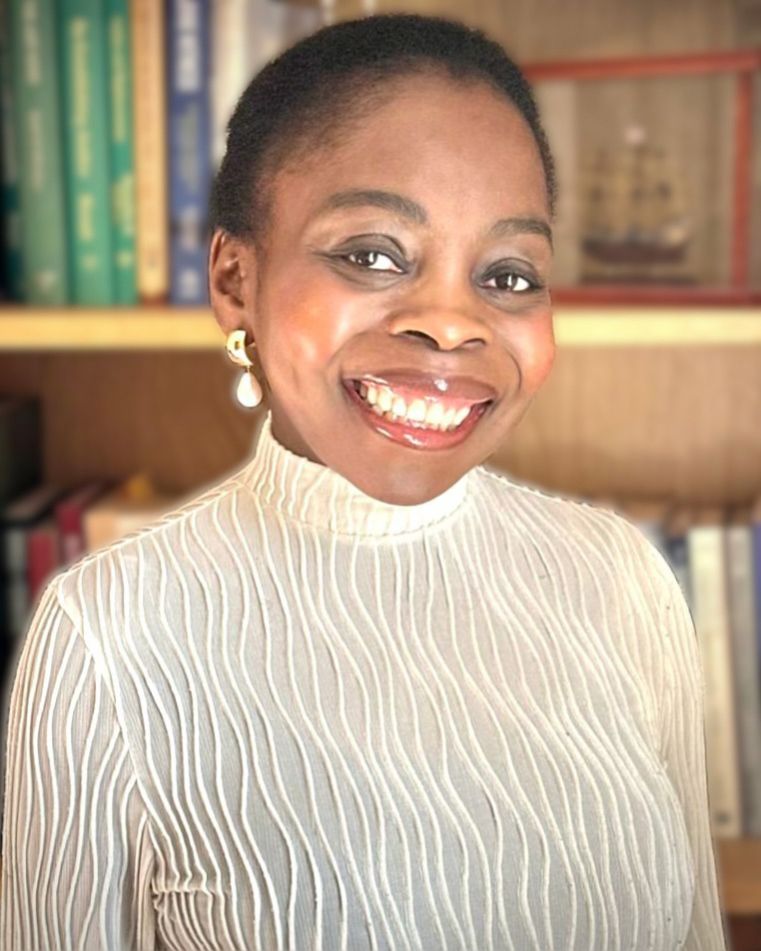
Dr Victoria Omotoso is a lecturer, researcher and author specialising in theology, visual culture, race and the Bible. She is Lecturer in Global Media and Digital Cultures at the University of Southampton and lectures in Race and the Bible at London School of Theology. Her research explores the intersection of biblical interpretation, visual representation, race and cross-cultural reception. Her monograph, Imag(in)ing Jesus in the Universal or Particular: Cross-Cultural Bible Film Reception of The Lumo Project: The Gospel of Mark (2014) and Son of Man (2006), was published by Bloomsbury Academic in 2025. She also works as a consultant and speaker on race, theology, media and questions of representation and belonging.
One of the tricksters’ promising potentials is their ability to offer new images and visions of the world and its future. Drawing on research into alternative political imaginations among Jewish progressive activists, the talk explores how women activists draw on memory of the past and Jewish traditions to imagine the future. While peace-building practices are usually associated with a liberal ethos, the protagonists of this talk draw on, intervene in, and invent magical traditions to gain a clearer view of the future and to intervene in its creation. Focusing on Women’s time tricking and future-making, the talk highlights the importance of situated feminine knowledge creation and explores traditions, such as coffee-reading, talismans, and ‘saint-cult,’ which were embodied and repeated for centuries, associated with the non-rational and therefore seen as inadequate to explain and act in the modern socio-political world. These practices are being hijacked, re-created, reclaimed from patriarchal contexts, and reused by women activists as trickster political tools to open cracks in how the past is told and transmitted, to envision the future, and to act on it in the present at both the personal and collective levels.
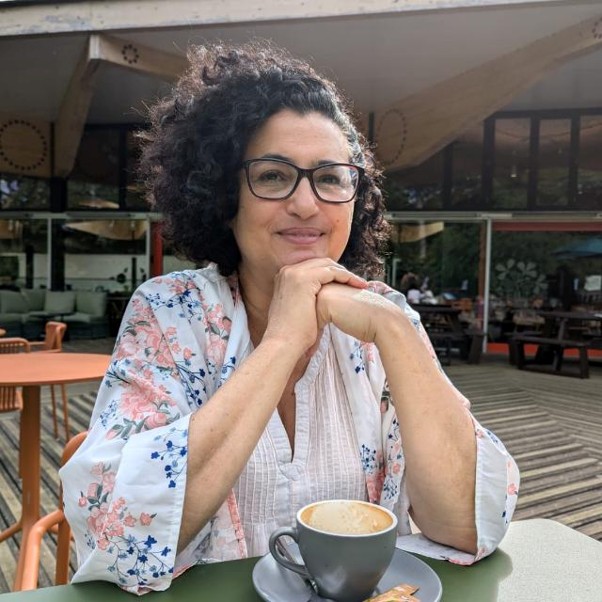
Livnat Konopny-Decleve is a British Academy International Fellow at The School of Social and Political Science at The University of Edinburgh. She is a political anthropologist researching the Jewish radical left and alternative political imagination in Israel/Palestine and beyond. Livnat received her PhD from the Department of Sociology and Anthropology at Tel Aviv University (2022) and was a Postdoctoral Fellow at the Leonard Davis Institute for International Relations at The Hebrew University of Jerusalem (2023). She is a former co-convenor of APeCS – Anthropology of Peace, Conflict, and Security, a network of EASA. In 2025, together with Adi Liraz and Na’ama Landau, Livnat produced the film The Rose of Ioannina, based on her research and funded by the UK Economic and Social Research Council (ESRC) Impact Acceleration Accounts (IAA). Her research has been published in journals including the Journal of Borderlands Studies, Israel Studies, Visual Studies, and Mafte'akh – Lexical Review of Political Thought.
Forthcoming CRPL speakers in Semester 1: Victoria Omotoso, Livnat Decleve and Scott Midson. More details to follow!
For more information, please contact Johanna Stiebert, Director of CRPL, j.stiebert@leeds.ac.uk
A record of past seminars hosted by the Centre for Religion and Public Life is available here.
News and events

Student Spotlight: Molly McKnight Published in Green Christian Magazine
Congratulations to BA Philosophy, Ethics and Religions student, Molly…
More

Non-profit alternatives and more transparency in algorithm design could help to fix dating apps, Faculty researchers argue
Exploring the promises and pitfalls of online dating
More
Islamophobia Awareness Month
On the occasion of Islamophobia Awareness Month, CRPL is pleased to promote…
More