

Charles Wallace India Trust Visiting Fellow 2026: Call for Applications
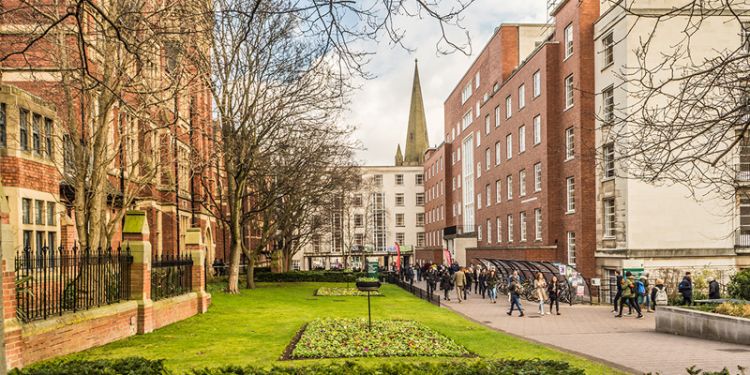
The School of History is delighted to invite applications for the Leeds - Charles Wallace India Trust Visiting Fellowship 2026.
Supported by the Charles Wallace India Trust (CWIT), one fellow will be appointed in 2026.
What is the Fellowship?
The Fellowship allows a mid-career scholar from India to spend up to three months at the University of Leeds to develop their research.
The CWIT Fellow will be expected to contribute to the vibrant research environment in the School of History and the Faculty of Arts, Humanities and Cultures, and present a research seminar on their work during the fellowship. They will also be encouraged to build professional relationships and develop research collaborations with members of the School of History.
Details of the award
The start date must be between 1 September and 14 December 2026, and the fellowship must last a maximum of 12 weeks (3 months).
The Fellow will be provided with a working space with a desktop computer in the School of History. They will have access to the library, internet, and office resources.
Fellows will deliver a research seminar in the school’s seminar series and will have opportunities for professional development and academic engagement.
Fellows will arrange their own accommodation. Advice on finding suitable local options will be made available.
Fellows are expected to deliver a final report to the Charles Wallace India Trust.
The financial contribution of the award
The Fellow will receive:
- Up to £800 contributed towards a return airfare
- £1500 per month living expenses (to include accommodation)
- £1000 research expenses
Fellows must apply and pay for their own visa. Letters of support can be provided.
Fellows must obtain their own travel and health insurance.
Eligibility
Fellowships should advance research projects that will benefit from spending time in the School of History at Leeds. Preference may be given to research agendas that synergise with existing scholarly interests within the School. Projects may be interdisciplinary, but must fall within the fields of Arts, Humanities, and/or Heritage.
Applicants must:
- be able to explain how the experience of an international fellowship will benefit their career development.
- be proficient in English language skills.
- hold a PhD in the relevant field, and/or demonstrate a proven track record, and show a willingness to work collaboratively.
- be Indian (and domiciled in India).
- be under 45 years old when the grant offer is signed.
- not have received any other CWIT grant in the last 5 years.
Preference may be given to candidates who have had little or no prior experience in conducting research outside of India.
How to apply
The application deadline for the 2026/27 fellowship has been extended. The new deadline is Sunday 5 July 2026. Please submit your application to history@leeds.ac.uk.
To apply, please submit the following documents, by email, to history@leeds.ac.uk.
- Covering email: detailing how you meet the eligibility criteria described above.
- Attachment: Curriculum Vitae (CV)
- Attachment: Research proposal. Include: project outline, aims and objectives, significance of the project, why the research would benefit from being carried out at Leeds, academic research context, proposed methods, outcomes and outputs, a workplan, and how the fellowship will enhance the applicant’s career trajectory. No more than 2000 words including bibliography.
- Attachment: One writing sample (published or unpublished) of no more than 8,000 words.
- Attachment: Details of two referees. Referees will be asked to provide references at the interview stage.
Please ensure that all the required documents are attached to the email, as late or incomplete applications will not be considered.
A shortlist of successful candidates will be invited to interview on Teams. We expect this interview to take place in mid July.
Further information
For further information, please contact Professor Andrea Major.
Past Fellows
- Dr Shaona Barik 2022-23. Learn more.
- Dr Aniket Chettry, 2023-24. Learn more.
- Dr Priyanka Tripathi 2024-25. Learn more.


