

Media, Inequality and Representation

Research groups


Race and Media Conference: April 2026
The School of Media and Communication hosted the international Race and Media Conference on the 22 and 23 April 2026, preceded by a pre-conference event, social event for early career researchers, and the Roundtable on the Media Image of Africa event.
The conference included 111 papers in total, two keynotes, a plenary session, and 24 panels, including a practice-based session. We welcomed 150 delegates, with around half of the speakers from the UK and half from overseas – mostly colleagues from the US, but also from Canada, Europe, Asia and Africa.
One of the delegates, Amani Braa, Université de Montréal, has written a beautiful blog post on the conference for Identities: Global Studies in Culture and Power (one of the generous sponsors).
Amani writes: 'If the Race and Media Conference made one thing clear, it is that the study of race and media is not simply about representation. It is about power. About who gets to define reality, and through which mediums. About how histories are remembered or erased. About how futures are imagined, or foreclosed.' Read Amani’s full blog post here.
The conference organisers were: Anamik Saha, Maitrayee Basu, Israel Campos, Helen Kim, Cindy Ma, Dibyadyuti Roy, and Sara Tafakori.
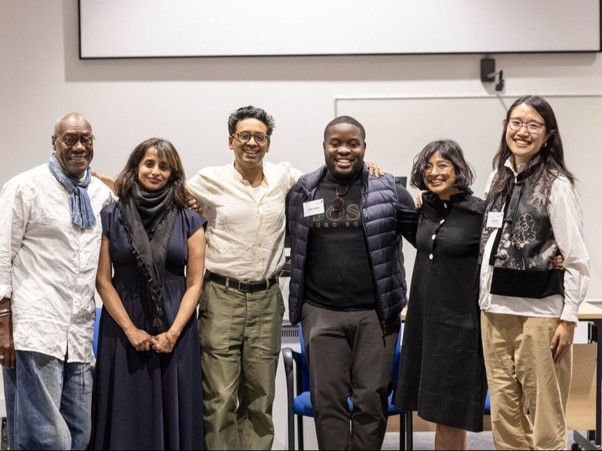
Group photograph featuring the organisers of the Race and Media Conference alongside keynote speakers Professor Herman Gray and Professor Paula Chakravartty at the University of Leeds, April 2026. Image credit: Andy Lord.
Events

Book launch – Digital Journalism Practice: Skills for Now and the Future
A reception to mark the launch of Digital Journalism Practice: Skills for Now and the Future (Bucknell, I. and Painter, L. 2026) including a conversation on the changing newsroom with industry insight
More
Research Seminar: ‘Gurus, Hucksters, Entertainers: How Influencers Reshaped Social Media’
This talk examines how influencer careers and revenues shape the content that populates our social media feeds.
More
Media Frontiers: ‘People Doing Cool Creative Work Online: An Industry Panel’
This Media Frontiers panel event brings five exciting digital creatives to the School of Media and Communication to discuss their process, inspirations and challenges.
More
Science into Pop: Triangulating Legitimacy in Three Experimental Music Traditions
How can the case of Jamaican dub reggae broaden our understanding of music experimentation?
More